
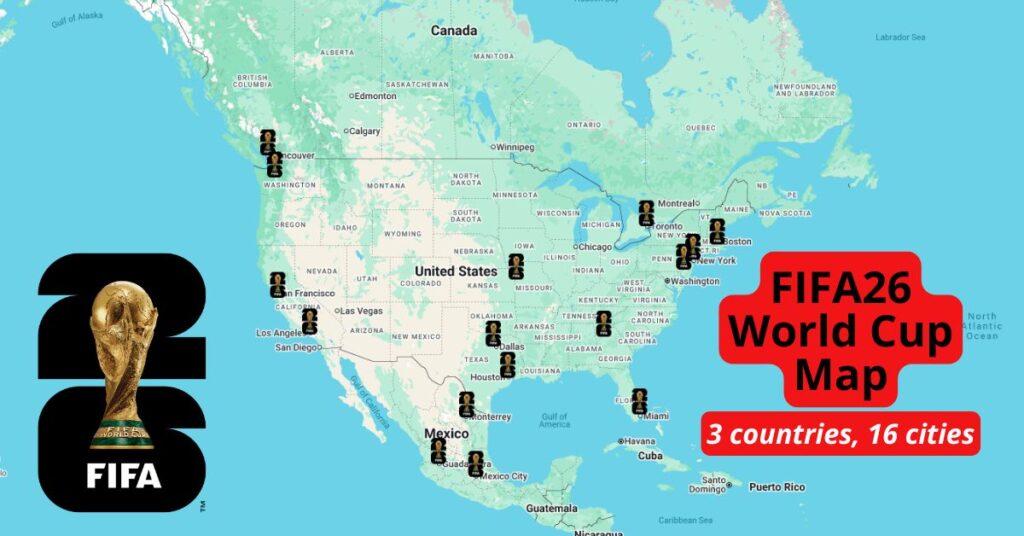
The countdown is on for the FIFA World Cup 2026, a historic tournament that will take place across North America in three nations: the United States, Canada, and Mexico. This will be the first World Cup hosted by three countries and the largest ever, expanding to 48 teams and 104 matches. Our interactive FIFA World Cup 2026 Map showcases all 16 host cities so soccer fans can explore every stadium, city, and region where the world’s biggest sporting event will unfold.
A Look Back: World Cup History in North America
The World Cup has graced North America only a handful of times before. Mexico became the first nation to host it twice in 1986 after first hosting in 1970. Both Mexican tournaments are remembered for legendary performances by Pelé and Diego Maradona.
The United States hosted in 1994, setting a record for total attendance that still stands today, while Canada made its mark hosting the 2015 Women’s World Cup.
The 2026 edition marks a new era, not only for its tri-national setup, but also for its scale. With 16 host cities across the continent, fans can experience soccer’s global celebration in diverse cultural and geographic settings.
Host Cities and Stadiums by Country
Canada
- Vancouver – BC Place Stadium
- Toronto – BMO Field
Mexico
- Mexico City – Estadio Azteca
- Guadalajara – Estadio Akron
- Monterrey – Estadio BBVA
United States
- Atlanta – Mercedes-Benz Stadium
- Boston (Foxborough) – Gillette Stadium
- Dallas (Arlington) – AT&T Stadium
- Houston – NRG Stadium
- Kansas City – GEHA Field at Arrowhead Stadium
- Los Angeles (Inglewood) – SoFi Stadium
- Miami (Miami Gardens) – Hard Rock Stadium
- New York / New Jersey (East Rutherford) – MetLife Stadium
- Philadelphia – Lincoln Financial Field
- San Francisco Bay Area (Santa Clara) – Levi’s Stadium
- Seattle – Lumen Field
What Makes the FIFA26 World Cup Special?
- Biggest World Cup Ever: 48 teams instead of 32, meaning more nations competing and more matches to enjoy.
- Sustainability Focus: Many stadiums are already in use for NFL, MLS, and other events, minimizing new construction.
- Cultural Variety: The North American setting brings together English, Spanish, and French-speaking regions, a true reflection of the sport’s global reach.
Explore the FIFA26 World Cup Map
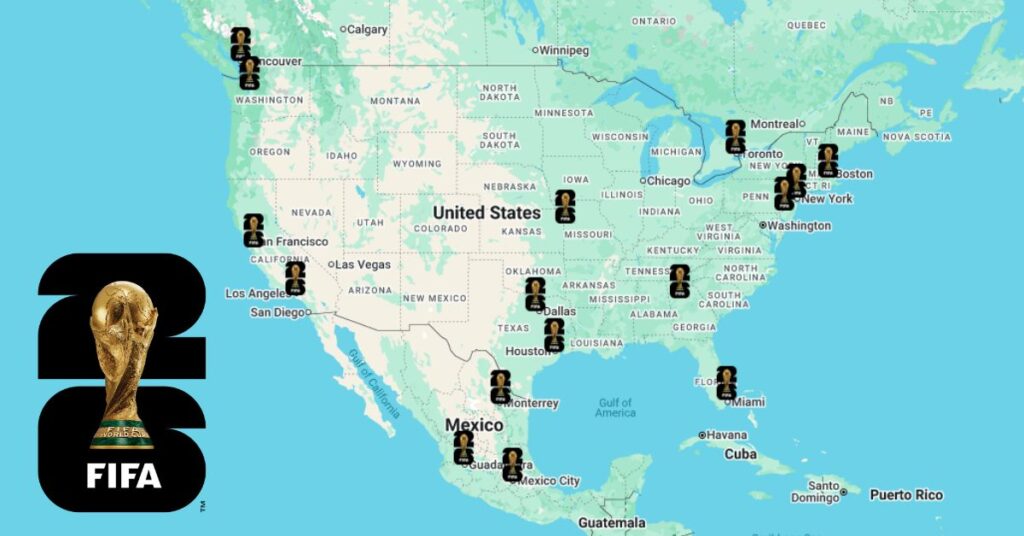
To help fans visualize where every game will take place, we created an interactive map of all FIFA 2026 host cities and stadiums. You can zoom in on each venue, learn about its capacity and location, and plan your travel route or watch party accordingly.
Visit the FIFA World Cup 2026 Host Cities Map on ZeeMaps to explore all stadiums and cities in detail.